
Know your Audience

Aims  and Objectives

  • To discover through reading texts: how do we know who the intended audience is?
  • How do we incorporate this in our own practice
  • Understanding how published work effects our own writing approach and execution
  • To understand what makes and doesn’t make a good story and why


Words and audience will expect to see when reading:

Fashion – dazzled, vibrant, beautiful, exclusive, expensive, stylish, facts, brands

Horror – darkness, creaking, scary, mysterious, violence, death, creatures

Poem – rhyme, poetic devices, rhythm

Sports – smashed, scored, masterful, facts, figures,  expert opinions

Music – beat, inspiration, lyrics, facts, figures


An Example of a Sports Feature:

This weeks Premier League weekend is set to be huge one as the battle for the title continues. At 12:30 on Saturday, Spurs will take on the re-energized Leicester City with both looking to secure a spot in the top 4. Former Leicester and Spurs star Gary Linekar told us, “This has all the marks of being one of the games of the season. Spurs will be looking to prove they are still title challengers, whilst Brendan Rogers will certainly set up to hurt Spurs on the counter. It could be goals galore!” Under Brendan Rogers, Leicester have put in some masterful performances this season, including a big draw against Chelsea and dominant 3-1 victory against Bournemouth. Also on Saturday, champions Manchester City take on struggles Watford.


An example of a Crime Story:

Click! The flash of the detectives camera cast a light throughout the hallway in which head stood. It was a massacre. Crimson blood on Crimson walls, splattered on the floor and dripping from the ceiling. Who ever had attacked the Johnson family, had done so with such ferocity that not a single surface seemed untouched by blood.
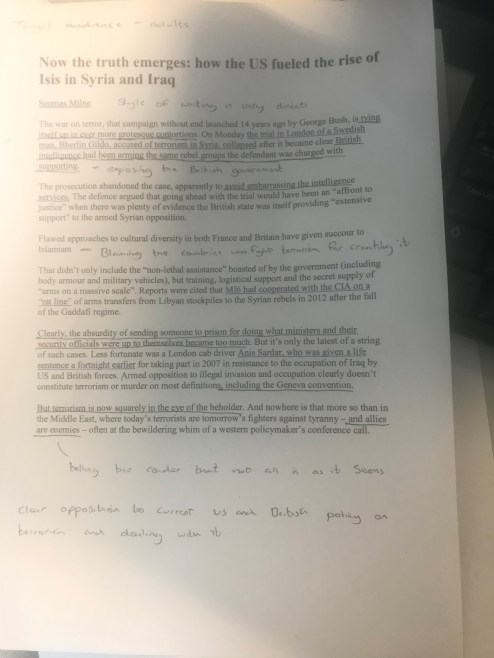


News Story VS. Feature Story:

  • News has to be put out within a certain time frame to keep it relevant
  • Features can sit around and wait for an event
  • News is a matter of fact
  • Features have far more opinions and have more research
  • News stories incorporate the inverted pyramid
  • You have more creative freedom with a feature and can write more
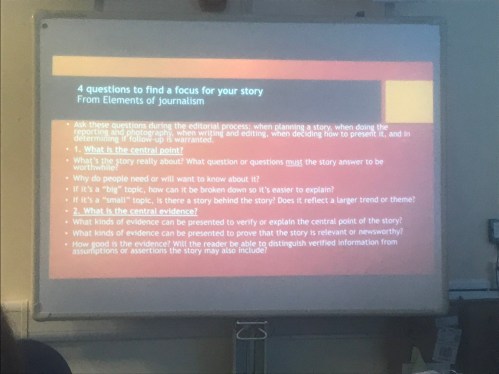
Primary research – Finding information for ourselves

Secondary research – Using information gathered by others


Exercise – Write a feature on any theme/ issue/ person that you wish to explore:

This weeks Premier League weekend is set to be huge one as the battle for the title continues. At 12:30 on Saturday, Spurs will take on the re-energized Leicester City with both looking to secure a spot in the top 4. Former Leicester and Spurs star Gary Linekar told us, “This has all the hallmarks of being one of the games of the season. Spurs will be looking to prove they are still title challengers, whilst Brendan Rodgers will certainly set up to hurt Spurs on the counter. It could be goals galore!” Under Brendan Rodgers, Leicester have put in some masterful performances this season, including a big draw against Chelsea and dominant 3-1 victory against Bournemouth.

Also on Saturday, champions Manchester City take on the struggling Watford in a David versus Goliath fixture. But could there be a major upset on the horizon? Pep Guardiola is without all but one of his senior centre-backs, and with the shock defeat to Norwich still fresh in everyone’s minds,  City will surely be wary. Watford on the other hand will go into the game with nothing to lose. Sitting firmly at the bottom of the table, Quique Sanchez’s men will surely look to capitalize on City’s defensive frailties. Looking back at their last game, an impressive 2-2 draw with Arsenal, Watford can take some comfort in knowing they are certainly improving. They registered 52% possession against the gunners and peppered their opposition with 32 shots.

This cracker of a weekend rolls over into Sunday with some fantastic games. Liverpool and Chelsea face off after disappointing European results, whilst a new-look West Ham play a United team that have looked devoid of inspiration in recent games. Liverpool head into their clash off the back of 5 wins from their first 5 games, showing no signs of ending their skintillating form. Chelsea on the other hand have started slowly, with Frank Lampard’s men claiming only 8 points so far this season. Chelsea do however possess a secret weapon in the form of young forward Tammy Abraham. His form has been electric with the youngster bagging 7 goals so far this season, including a brilliant hattrick against Wolves. Could this be a Premier League classic?

The other exiting game on Sunday between United and West Ham also has the possibility of being a belter. West Ham have recruited some serious talent over the summer, with French striker Sebastian Haller proving to have been one of the buys of the window so far. He has seemed dangerous so far this season, scoring 3 goals in the opening 5 games. It will prove a stern test for United’s back-four who have however seemed much more secure this year with the additions of world-record defender Harry Maguire and young right-back Aaron Wan-Bissaka.
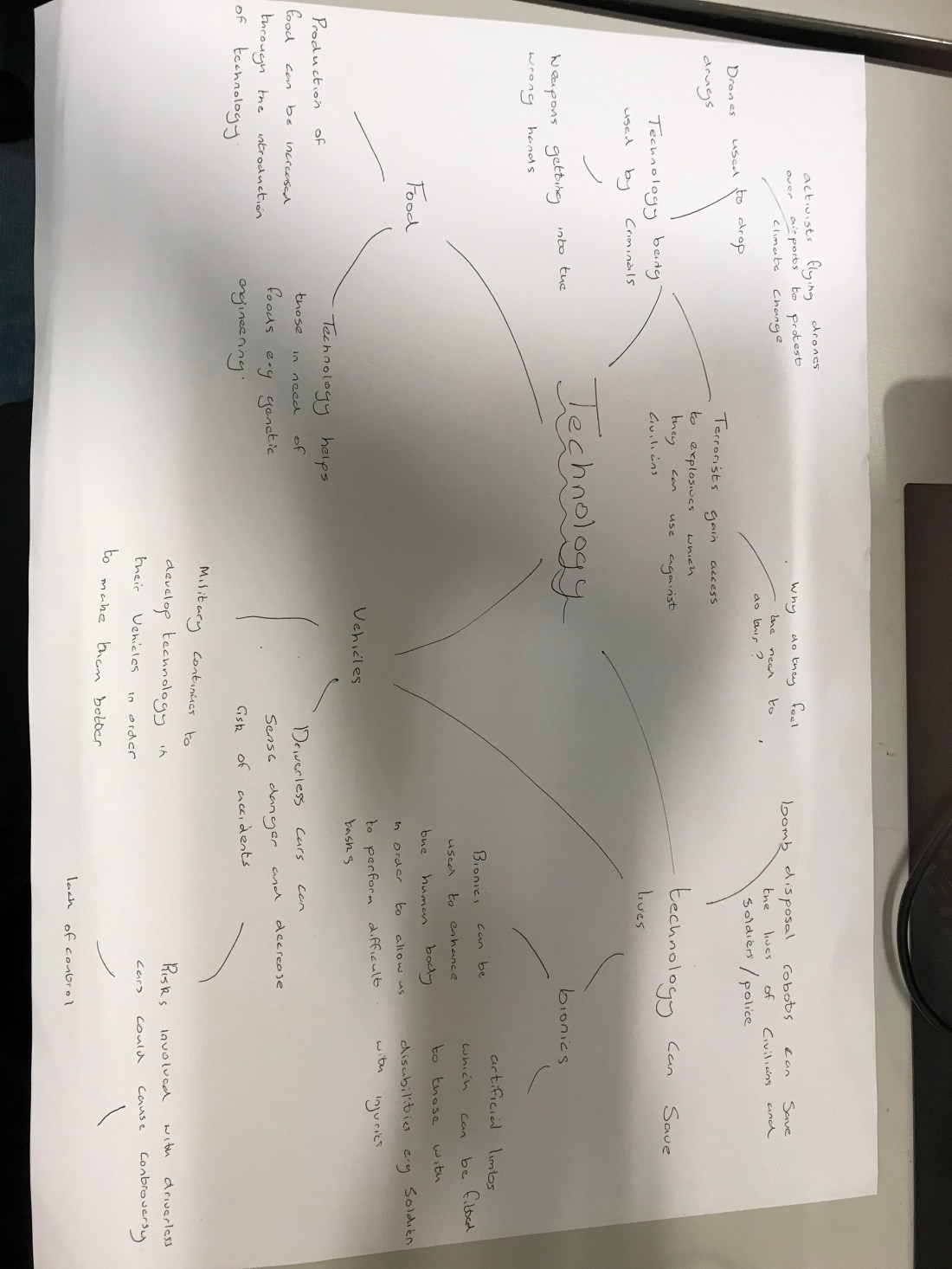
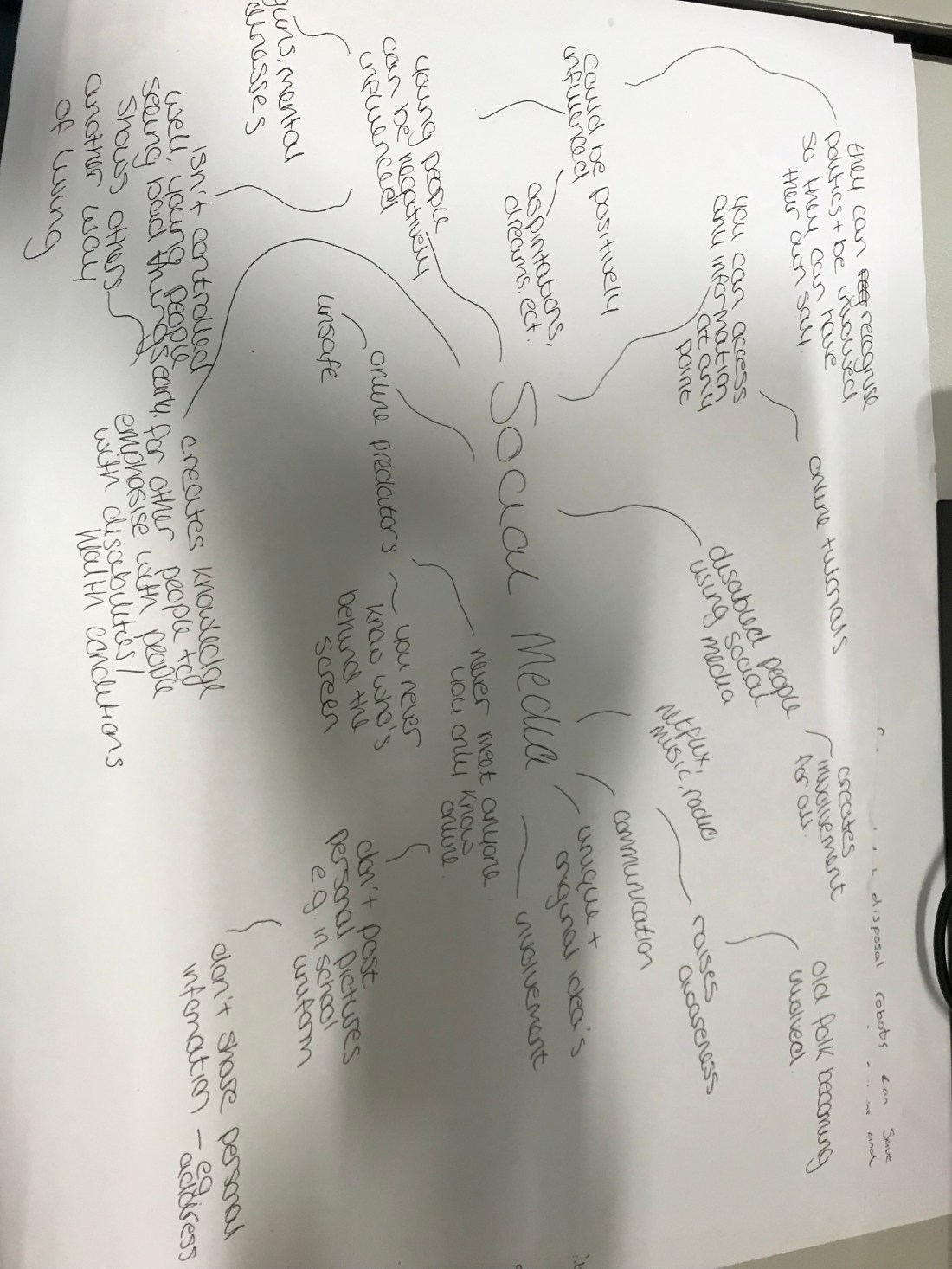


Year 2 Week 1 – Greg’s Class

Aims-

    • To explore different ways of expressing opinions
    • To uncover rules of opinion pieces
    • To write a selection of my own opinion pieces


Writers express their opinions through the use of many literary techniques. Whilst demonstrating  these techniques, many writers attempt to show awareness of the cultural, political and social views of others. Here are some of the literary techniques used –

  • Repetition – Used to convey a point or idea repeatedly to give more effect
  • Rhyme – Improves the flow of a piece of writing and makes it more appealing for the intended audience
  • Humor –  The use of humor and sarcasm in some pieces highlights the views of the writer, whilst also making the reader want to continue reading.


The main view shown in Enter Shikari’s song is the corruption and uselessness of the current establishment. They use many metaphors for current society, with the main one being that of the “house in a field on the side of a cliff”. The “waves crashing below” are the establishment, which is threatening to destroy society. Eventually the house is destroyed after ignoring warnings, which shows what they think will happen if we don’t take action in our current situation.


The way in which the poem “Still I rise” and the rock song “System” portray similar views contrast heavily, with the poem being far more light hearted in tone compared to the serious tone of the song.


Year 2 Week 1:

It is requirement that your product will have:
1. A front page
2. A content page
3. A review (500 words approximately) presented on a double page spread.
4. A feature optional (1000 words approximately) presented on at least two double
page spreads.
5. Embedded short video produced by yourself (review of the product or service).The
video will depend on the type and content of the publication. For example you
could have a review of the film, create review of the latest piece of equipment, etc.
6. You can produce additional spreads with content chosen by yourself.

Deliberate Thinking Techniques:

preparation > incubation > illumination > verification

Changes made throughout the FMP

Topic :


My original plan was to make a magazine soley related to grassroots football, featuring articles based on different aspects of the game. As I progressed into writing the articles about grassroots football, I quickly realised that my knowledge on the subject was far more limited than my knowledge on proffesional football. After spending some time researching grassroots, I came to the conclusion that there was simply not enough interesting topics that I could write about in order to keep my audience interested. After making this decision I decided to make a regular football magazine, but kept the idea of grassroots in mind. This is how I came to making my magazine a “Grassroots special”, as it would give me the freedom to not only write about non-league football.

Articles:


Throughout the pre-production stage of my magazine I juggled many ideas of what to write about before setteling on 3 which I found most interesting. Originally I had planned to write about grassroots fitness, coaching and an interview with a player, however once the topic of the magazine had switched these were no longer feesable. I did consider keeping the interview with a player, but he was not available to talk so I had to reconsider another idea. This led to me interviewing a coach instead which ended up being one of my 3 pieces. My other 2 articles were written after some consideration and research as I needed articles that would interest my readers.  I settled on writing one piece about a recent event for my younger audiemce, and another about a player from the 90’s to interest both my younger and older readers.

Design:


The design of my magazine has not changed a lot since I started this project as I have consistantly stuck with the design of 70’s magazine. I have experimented with fonts to see what ones look most appealing and consulted my tutors to ask for their opinions. I ended up choosing “rockwell” as I felt it looked best on the front of my magazine. The other aspect of my design that has changed are the images. I have had to look through a vast number of images in order to choose which ones go best with my colour scheme and which ones are the best quality. I feel that the images I have settled with are both high quality and fit very well with my colour scheme.

Magazine interview FMP


What made you take up management?

“When I was younger I always looked up to my manager when I played for my local team, so when I got the opportunity to manage myself, it was an easy decision. My sons team had lost their coach and I’d been helping out for a while so I volunteered to take over and implement some of the ideas that I had taken from watching football on television.”

What are some of difficulties you’ve faced whilst managing?

“Teenagers! Trying to get a full team of teenagers out of bed on a Saturday morning is quite possibly the most difficult task in the world. I’ve had some instances where some of my players are playing with no sleep and a massive hangover which does not make for a pretty sight. Organizing fixtures is also really troublesome. There’s a real shortage of referee’s in the game at the moment so it’s pretty much a free-for-all with who can get one. When the weather is bad it makes organizing even harder as the game can be called off at a moments notice so you have to be prepared to let everyone know that the game is cancelled.”

 Would you recommend grassroots management to others?

“Yeah I would definitely recommend it. For all the hassle and bother, the reward far out-weighs it. I’ve experienced so many proud moments when managing my teams which has made me really happy. Without people volunteering, we wouldn’t have any teams to play for so that’s probably the biggest reason i’d give for taking the reins.”


The road to Kiev – FMP Research

With Liverpool qualifying for the champions league final for the second time in 2 years, here at STRIKE we have decided to look back on their last European adventure in 2018. This is the story of their journey…

The campaign kicked off with a qualifier against Hoffenheim, a game the reds would have been wary of due to the unusual caliber of opponent at this stage of the competition. Jurgen Klopp named a strong side to challenge the Germans, including the likes of Mohammed Salah, Roberto Firmino and Sadio Mane. The reds suffered a heart-stopping moment when Dejan Lovren clumsily brought down Kramaric in the box, handing the Bundesliga side a chance to open the scoring. Simon Mignolet made a fine stop to keep the score at 0-0 and keep the game going in Liverpool’s favour. Later on, teenage prodigy Trent-Alexander Arnold stepped up to strike a curling free kick on his European debut, sending it over the hapless Hoffenheim wall and into the net sparking wild celebrations amongst reds supporters. An own goal then made it 2-0 the rampant reds, however a late goal from Mark Uth brought it to 2-1 and made for a tense second leg of the tie. After eight short days the second leg had arrived and Klopp elected to stay with same lineup he had deployed previously. This time the reds comfortably dispatched the deflated Germans in a 4-2 victory, that included a contender for goal of the season when Emre Can finished off a superb team goal that was well orchestrated by Firmino, Mane and Wijnaldum. This victory sent them through to the group stages.

This was the first time Liverpool had got to the group stages since 2014/15 and Klopp’s men were eager to impress. Pitted against Maribor, Spartak Moscow and the European pedigree of Seville, reds fans knew they would be tested. The group stage kicked off with a frustrating 2-2 draw with Seville. Liverpool dominated the game and recorded 24 shots compared to Seville’s 2 on target. Roberto Firmino missed a penalty at 2-1, which ultimately cost Liverpool 2 points and made the rest of group stage all the more difficult. A game against Moscow finished in a similar fashion with a 1-1 draw leading to some fans being critical of the teams lack of quality in front of goal. This would soon change. Liverpool turned up to their 3rd group stage game against Maribor with a new found swagger, courtesy of a good run of league games . Salah and Firmino both found the net twice, along with goals from Coutinho, Oxlade-chaimberlain and Alexander-Arnold. The 7-0 thrashing was soon followed by a comfortable 3-0 victory in the reverse fixture. Liverpool’s prowess in front of goal continued into the game against Seville with Firmino bagging a brace and Salah adding a third. This game however was overshadowed by the defensive frailties of the Liverpool back line as Seville grabbed 3 goals to make the score 3-3. The final game against Moscow was a decimation. Liverpool hit seven, with captain Phillipe Coutinho getting a hattrick on what proved to be one of his final games for the Merseyside club. The devastating front three of Salah, Mane and Firmino also each bagged a goal in what proved to be one of the heaviest ever defeats inflicted by an English team in the Champions League.

The round of 16 had arrived and Liverpool manged to avoid all the big teams left in the competition. They had secured a home and away tie against Porto, a team with vast amounts of European experience. Up first was a trip to Portugal, with many reds fans worried about how the team would perform at this stage of the competition. The attacking might of the Liverpool squad was something to fear but all knew that defense was the teams Achilles heel. Fortunately, the Liverpool defense was barely tested. The “Fab three” of Mane, Salah and Firmino decimated the Porto back line with Mane claiming a sensational European hattrick to cap off a historic 5-0 victory. This put the reds in the drivers seat going into the second leg at Anfield and it was obvious how confident Klopp was, as he was happy to cruise to a 0-0 draw in the reverse fixture.

There was one team Liverpool did not want to get in the quarter-final draw, and they were run-away premier league leaders Manchester City. Flashbacks to the 4-0 defeat Liverpool suffered at the start of the season replayed in the minds of many as City were drawn up against Liverpool for an all English clash of the titans. The belief around the Liverpool squad however did not reflect the fears of some of the fans. The hunger for success had set in and it was obvious that Klopp expected only the best from his players leading up to the first leg at Anfield. Before the game, the City team bus was mobbed by reds fans who gave the high flying city players a taste of what European football is all about. The game kicked off at Anfield, and what came was a game that will live long in the memories of those who watched it. City started brightly, but soon fell apart under the sustained pressure of an inspired Liverpool side. The reds magical Egyptian, Mohammed Salah opened the scoring and sent Anfield into hysteria. If that wasn’t enough for reds fans, it was only a matter of time before a reborn Alex Oxlade-Chamberlain took the game by the scruff of the neck and rifled home a stunning shot from outside the box. City were stunned. All defensive discipline was lost allowing for Mane to get in behind and direct a header into the bottom corner for Liverpool’s third before the half time whistle. One can only imagine the team talks both managers gave at half time, but both teams came out in the second half and completely switched roles. City relentlessly attacked Liverpool’s back line, but they held on for a huge 3-0 win. The second leg came with huge expectation on the shoulders of both teams as City faced an up hill battle to overtake the reds machine. Gabriel Jesus scored almost instantly after kick-off and many felt that city really would turn the tie on its head. Liverpool bore the brunt of City’s attacking prowess in the first half, but their heroic defending kept the ball out of the net until half time. After a tense half time break, both teams came out to the hum of an expectant crowd. It also came to light that Pep Guardiola had been sent to the stands following an altercation with the referee. Cheers rang out as the match got back underway, and it was Liverpool’s turn to dominate proceedings as they drove forward in waves. Liverpool got their goal in the 56th minute through no other than Mo Salah who chipped the ball into the net for his 39th goal of the season. They had secured the crucial away goal and it was left to Roberto Firmino to round off the game, squeezing the ball into the net from a tight angle to finish the game 2-1. The impossible had been achieved, Liverpool were in the Champions League semi-final.

An unusual opponent at this stage of the competition, Roma had come into the game after pulling of one of the greatest European comebacks in the history against Barcelona. The match started at a high tempo which continued throughout as Liverpool laid siege to Roma’s goal. Sadio Mane missed a handful of guilt-edged chances before Liverpool suffered a major setback. Oxlade-Chamberlain took the full for of a Kolarov challenge and was forced off the pitch. Liverpool seemed worried after the switch, with Edin Dzeko going close to opening the scoring. That seemed to wake Liverpool up, and from there they found their rhythm. Mo Salah took centre stage against his former club, scoring 2 and assisting a further 2 more goals. Liverpool found themselves 5-0 up with just 10 minutes to go, however their defense went back to sleep and Roma punished them. 2 late away goals made sure the reverse fixture would be a nervy affair. The second leg in Rome promised to be as spectacular as the first as the whistle blew for kick off. Sadio Mane opened the scoring before a freak own goal from James Milner leveled the score. Gini Wijnaldum scored from a corner to be Liverpool back ahead. Roma went on to score three more through Edin Dzeko and Radja Nainggolan. The match played out with in Roma’s favor, as they ran out 4-2 winners, however Liverpool had the last laugh as they won 7-6 on aggregate. The travelling Liverpool fans celebrated wildly with their players as the reality of the situation sunk in. Liverpool were back to the pinnacle of European football.

This was it. Centre stage in Europe’s greatest football competition against champions league royalty in Real Madrid. The mood around Liverpool supporters was mixed as many believed Madrid to be the unbeatable force in the competition. The day of the final had come and crowds gathered inside the Olimpiyskiy Stadium in Kiev, Ukraine. Both teams named full strength line ups, and as the whistle blew for the commencing of the match, both sets of fans let out a roar of excitement. Liverpool dominated the opening minutes of the match with Madrid unable to adjust to the pressure they were being put under. However, tragedy struck as Madrid captain Sergio Ramos wrestled Mo Salah to the ground causing him to land awkwardly on his shoulder. Salah tried to continue but was overcome by pain and had to be substituted for Adam Lallana. Some reds fans were inconsolable as their star player left the field in tears. Liverpool drove on but a freak mistake by goalkeeper Lloris Karius allowed Benzema to tap into an empty net. The reds became deflated as Madrid raised their game, but Sadio Mane did manage an equaliser, heading into the bottom corner to draw the game level. However, Madrid introduced Gareth Bale who turned the game on its head. In the 64th minute Bale produced a sublime bicycle kick that stunned Liverpool, and went on to score another from long range, courtesy of more questionable goalkeeping. Liverpool had fought hard but just not hard enough. Their fairy tale was over.

The original Ronaldo story – FMP

When the name Ronaldo is mentioned these days, who’s the first person to come to mind? My bet would be Cristiano, the Portuguese maestro who’s been ripping up the world of football for the past decade. But what if I were to tell you there was another world beating player who shared the same last name?  The original Ronaldo who blasted in goals for the likes of Barcelona and Real Madrid in the 90’s and who some consider to be even better than the Ronaldo that we see at Juventus today.

Born on the 18th September 1976 in Rio de Janeiro, Ronaldo grew up around football. The city of Rio breathes the sport and it was where a young Ronaldo began to play with his friends in the streets. Soon after his parents separated when he was 11, Ronaldo dropped out of school in order to pursue his dream of becoming a professional footballer; something that nearly every child in Brazil also wanted to do. At the age of 12 he joined Social Ramos indoor futsal team and showcased just how devastating he would grow up to be. Once credited with scoring 11 of his teams 12 goals, Ronaldo led the city youth league’s goal scoring chart with 166 goals in his first season. Ronaldo has since credited futsal for being the sport that perfected his dribbling and hence made him so unstoppable. Many now knew just how good this young boy would be and so at the age of 13 Ronaldo was signed by agents Reinaldo Pitta and Alexandre Martins. A big statement for a boy who had only just become a teenager. Now playing for Sao Cristovao, Ronaldo was being coached by former Brazil international Jairzinho who instantly recognized the boy’s talent. At the age of 16, Jairzinho recommended Ronaldo to his old club Cruzeiro, and so the teenage prodigies career began.

The year was now 1993 and Ronaldo’s career at Cruzeiro began to take off. Making his professional debut against Caldense on the 25th of May, he went on to make some more appearances before finally catching the attention of national media. In one match against Bahia in November, Ronaldo scored 5 goals and showed the nation what a talent he really was. Overall Ronaldo scored an incredible 44 goals in 47 games for Cruzeiro, helping them win successive trophies in 1993 and 1994.

The next chapter in Ronaldo’s illustrious career took him to the football stronghold of Europe. Choosing to sign for PSV Eindhoven after the 1994 world cup, Ronaldo continued his rich vein of form by scoring 30 goals in his first season in dutch football. By this time even the established pros had began to take note of how good Ronaldo was becoming. After Ronaldo had scored a hattrick against Bayer Leverkusen in the 1994-95 UEFA cup, German world cup winning striker Rudi Voller stated “Never in my life have I seen an 18 year old play in this way”. Ronaldo’s second season was blighted by serious knee injuries, however it didn’t stop him doing what he did best – scoring goals. He scored 19 in 21 appearances and finished his stint in dutch football having won the top scorer award for 1995 and Dutch cup in 1996. After just two seasons he had scored 54 in 58 games.

During his time at PSV Ronaldo had been closely watched by some of the biggest clubs in the world including Barcelona and Inter Milan. Barcelona won the race for the coveted talisman, forking out a world record $19.5 million. During in his debut season in la liga in 1996-97 he scored 47 goals in 49 games and claimed the top scorers award yet again with 34 league goals – a feat that would not again be achieved until 2008. Although his time in Barcelona was limited, Ronaldo picked up many awards including the UEFA winners cup, Copa del Rey,  Supercopa de Espana and even the world player of the year. Too this day, even Barcelona legend Lionel Messi says “Ronaldo was my hero. He was the best striker I’ve ever seen”. Ultimately for Ronaldo, Barcelona turned out to be a stepping stone for bigger and better things – something few people can say. Having failed to agree a contract extension at the end of the season, Inter Milan swooped in to grab their man in 1997 for yet another world record deal of $27 million.

Ronaldo’s adaption to Italian football was seamless, picking up exactly where he left off at Barcelona. In his debut Serie A season he scored 25 goals and picked up the Serie A player of the year award. It was now that Ronaldo had began to develop into the ultimate complete forward, similar to the likes of Sergio Aguero and Karim Benzema who we see today. He could thread the ball through the eye of a needle and fire in free kicks from range whilst maintaining his natural ability to score goals inside the box. During his first season at Inter he won the world player of the year award for the second time and collected the esteemed Ballon d’Or which is today collected by the likes of Messi, Cristiano Ronaldo and Luka Modric. In 1998 Ronaldo won the UEFA cup and was named player of the tournament for that years world cup. His mesmerizing elasticos and drag backs were straight out of a video game, and he was said to be the best striker in the world at that point – being appointed Inter’s captain by the end of the 1998-99 season. Across the city at AC Milan played Paulo Maldini who many still say is the best centreback of all time. He counts Ronaldo as one of the two best players he has ever played against, stating “Ronaldo during his first 2 years at Inter was a phenomenon”. In 1999 Ronaldo’s world came crashing down as his earlier knee injuries returned with a vengeance. During a league match he felt his knee buckle and was forced to limp off the pitch. The injury kept him out till 2000 and in his first game back it couldn’t have gone much worse. After just 6 minutes on the pitch the ligaments in his knee gave way causing him to collapse to the floor in agony. All the Inter players and Lazio players rushed to help him and the world of football showed it’s support to one of it’s greats. The injury caused him to miss the whole of the next season as he struggled with the rehab, knowing that the injuries would ultimately rob him of his explosive speed. He returned for the 2002 World Cup and helped his country claim the trophy, later becoming world player of the year for the third time. During his 5 years at Inter he had scored 59 goals in 99 games, which was incredible considering the huge setbacks he had suffered.

The next destination for Ronaldo was back in Spain at Real Madrid who had just begun their galactico era. He transferred for $46 million, but was initially kept out of the team with yet another injury. On his debut Ronaldo scored twice and received a standing ovation,  eventually finishing the season with 23 league goals. He won the Intercontinental cup in 2002 before getting his hands on La liga and the Spanish super cup in 2003. In his second season while playing against Manchester United in the Champions league, Ronaldo scored a hattrick to dump the English club out of the competition. Both sets of fans gave him a standing ovation as he was substituted, and he later recalled “For me it remains a very beautiful, a very special moment”. Madrid went on to bow out of all major competitions that season due to Ronaldo’s injuries. He did however finish as the leagues top scorer with 25 goals. From 2005-07 Ronaldo’s Madrid career took a turn for the worse. Injuries kept him out of the team and weight issues forced then manager Fabio Capello to take a tough stance with his star man. This eventually ended in Ronaldo’s exit.

In 2007 Ronaldo transferred back to Italy, this time to his ex team’s arch rivals AC Milan. After passing a medical under the close supervision of Italian doctors, Ronaldo signed a contract and was awarded the number 99 jersey. His career for Milan was short and fairly unsuccessful for his lofty standards. He did become one of only two players to score for both sides in the Milan derby, however the goals had stopped raining in as much as they used too. After his first and only season with AC Milan, Ronaldo was released and packed his bags to go back to Brazil with Corinthians. Now in the twilight of his career, Ronaldo had a few good games prompting a call for him to return to the national team. In 2011 Ronaldo called time on his amazing career and has since gone on to become a united nations goodwill ambassador and majority shareholder of a small Spanish football team.


FMP – Week 1

The things you like? – 

I like to write as it allows me to express my thoughts through the words I use and stories I write. I also like being around my family as I believe family is one of the most important things in life. Another thing that I like is being outside and seeing the world around me. I like doing this through playing sports such as cricket and football, and also simply travelling around.

The things you do not like? –

I do not like it when I am stuck inside as I feel limited in what I can do. I feel that I cannot explore or take pleasure in simply being out in the fresh air. Another thing I don’t like is politics as I find the subject very boring and confusing. I try to stay well clear from conversations involving the topic.

The things you are passionate about? – 

The two huge passions I have is sports and travelling. From the age of 7 or 8 I have played football, rugby, cricket and variety of other sports, some of which I’m good at and others I am not. The competitiveness of sport gives me a buzz and is something that I simply can’t get away from. Sport has influenced my decision to join this course as I knew that it was something that I could write about. Travel has also had a huge influence on my life ever since I was born. My first experience of travel was going to Spain as a baby and since then I have been to 3 continents and 8 countries. The experience it has given me has opened my eyes to how other people live and made me appreciate other cultures which I would have know nothing about, had I not traveled.

Things that influenced you and shaped you as a person? – 

The one of the main things that influenced me and shaped me as a person is my parents. They are both very hard working people who have made successful careers for themselves. My dad started out as a lifeguard in America, having earlier played handball for Great Britain and cricket at a high standard. He came back to Britain and went into recruitment, rapidly rising to become the managing director of a multi national company. His love of sport and work ethic have rubbed off on me and I hope to be as successful as he is one day. My mum created her own business looking after dogs which has become very successful and allowed her to do what she loves. This inspires me to do what I love and hopefully in the future I will do a job that I enjoy.

Writing this year that has been your favorite and most successful? – 

https://wordpress.com/post/archiehallsportsjournalism.game.blog/88

My crime story is my favorite piece of writing as I feel that it is very well written and sticks to the conventions of crime writing.

Things that you worry about? – 

The major thing that worries me is getting very ill as I hate the thought of being trapped inside a hospital all day. Hospitals are probably my least favorite places to be as the smell and gloom of them sends shivers down my spine. To overcome this fear I think I need to appreciate health whilst I still have it and just push the worries to the back of my mind.

Things that you would like to change? – 

There a hundreds of things about the world that I would like to change, but one of the main issues that I have witnessed first hand is the resurgence of racism in society. Over the past hundred years, huge steps have been made to improve equality in England and we have long prided ourselves on being better at it than those overseas; however people have began to slip back to the darker times. One of the prime examples of this is at football games where certain sections of fans have directed racial abuse towards players and each other. In my ideal world this wouldn’t happen, and I hope that in the future steps are taken to route out these individuals and punish them appropriately.

Your deepest fears? –  

My deepest fear is losing family as they are the most important thing in my life. I would’t be able to function without them as we are all so close.

People you feel comfortable talking too: who and why?

The people I feel most comfortable talking too are my family and friends. I know I can tell my family anything, especially my mum and dad. If I’m angry or just not feeling myself they can usually make me see sense. My friends make me feel comfortable as we’ve all known each other for a long time and have been through a lot together. If one of us is down we can always make each other laugh which generally makes everyone feel better.

Your small thoughts and big ideas

My small thoughts mostly relate to my hobbies which are football and cricket. I think about the teams that I’m going to be playing and if they’re any good. I also think about going out with friends and what we’re going to do. My big ideas relate to what I want to do with my life after college. I aspire to be a SWAT officer or soldier who makes a living helping and protecting people.


70’S Football magazines focus – My main influence


One of the key influences on my magazine is the design of 1970’s football  magazines, especially ‘GOAL’. I like the way in which a single image is stuck over a block color background in order to make it stand out. The title is all in capitals which I think would grab the readers attention more than others and make them want to look further. On a majority of the front covers, there are around 3 small snippets of info of what to expect in the magazine which gives the reader just enough information but should make them want to read on. Beneath the title you can see the magazines slogan which is “The worlds greatest soccer magazine weekly”. This is a memorable line and I think it makes the magazine unique.

Main design features :

  • Bright single color background that is usually red, green or blue
  • Large circular image in the center of the page, however some have the circular image towards the bottom corner
  • Big bold title in yellow across the top left of the magazine
  • Magazines logo in smaller yellow font beneath the title
  • Solid red box surrounding the title and slogan
  • 3 or 4 small quotes or sentences relating to the articles dotted around the outside of the page in either white or yellow text
  • Price and date of issue in tiny font beneath slogan

This slideshow requires JavaScript.

How I will make my magazine look like a classic :

  • Dampen the colors in order to make photos look older
  • Use older fonts that can be seen in other examples of magazines

Colour Palette 


70's colour pallete