My project plan

  • 28th – 30th November
  • Complete all questions, complete plan, begin drafts
  • State what has been completed during the week and show examples of work


  • 1st-6th December
  • Finalise drafts of work and submit for marking. Find people who I can interview and book out recording equipment in order to do so. Edit my initial recordings to see how well they fit together.
  • Check where I’m at in relation to my plan and post what I have done this week. Check what I need to do the next week.


  • 7th-15th December
  • Using feedback from my tutor I will write out my final pieces. I will go down to the recording studio and record my radio piece. Begin final evaluation.
  • Refer to my plan and check if I am on target and all work is completed. State what production  methods have been used and give examples of work.


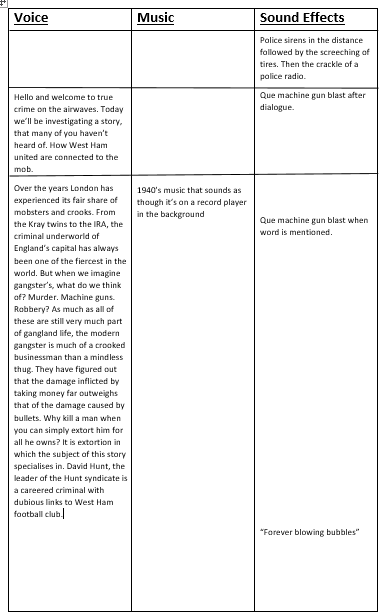
Radio Piece

• Social and ethical cleansing
• Whole generation not able to live in London
• Link David hunt to this


Creative piece

• Creative writing piece about how they bring David Hunt in for questioning
• My character is a young officer who thinks in the same way
• He knows how hunt is controlling the property market
• One of the other detectives is on Hunts pay role
• Try to figure out who the dirty cop is


Young people unable to buy even the cheapest houses – led to research in housing development – led corruption – led to specific ideas around social cleansing – Police + local gov + Criminal corruption + Olympic village development = Who can afford to live there

Unit 9

Analyzing 3 industry examples

  1.  Narrative devices – A narrative device is a technique used by a writer in telling a story. Narratives are stories that tell a listener or reader about a series of events. Narrative devices can be used to manipulate the writing style or the content of the story.

Literary devices – The definition of literary device is a technique a writer uses to produce a special effect in their writing. An example of a literary device is a flashback. An example of a literary device is an analogy.

The difference between a narrative and literary devices is that is that narrative devices are used to tell a story, where as literary devices are used to produce special effects in writing such as a flash back.

2.

Plot – the main events of a play, novel, film, or similar work, devised and presented by the writer as an interrelated sequence.

setting – the place or type of surroundings where something is positioned or where an event takes place.

tone – a particular quality, way of sounding, modulation, or intonation of the voice as expressive of some meaning, feeling, spirit, etc.

genre – a style or category of art, music, or literature.

theme – an idea that recurs in or pervades a work of art or literature.

simile – a figure of speech involving the comparison of one thing with another thing of a different kind, used to make a description more emphatic or vivid

metaphor – a figure of speech in which a word or phrase is applied to an object or action to which it is not literally applicable.

personification – the attribution of a personal nature or human characteristics to something non-human, or the representation of an abstract quality in human form.

3.

I think that the most important skills in writing good journalistic pieces are research, “the hook” and the five W’s (Who, what, when, where, why, how). Research is essential to any good journalist as you must be well informed on your subject before you begin to write about it. Research can be done in many different forms, with the main one being primary and secondary. Primary research is done by the person writing the article and can be done in the form of surveys and interviews. Secondary research is taken from others and is commonly found on the internet. When I wrote my piece on “R9 Ronaldo”, I used a lot of secondary research to get quotes from famous people.

“The hook” is an interesting early angle on your story that grabs your readers attention and gets them to continue reading. Any good writer wants to captivate their audience within the first few lines of their work in order to keep them interested. A hook will generally tell you just enough about the story to give you some idea of what it is about, without compromising the entirety of the article. Here is an example of a hook, taken from a Daily Mail article : “You no longer need to decide between an Egg McMuffin and a lie-in because McDonald’s has announced it will be serving breakfast until 11am from next week.” It tells you what directly what the article is about and plays on a real life issue that people can relate to.

The final skill I believe is important is the use of the 5 W’s. This is vital as it covers all of the points that your audience are going to want to know. For example, if you were to write an article about a fire in a house, you could say “At 10 o’clock on Sunday 28th March, a fire broke out on White Chapple lane at the house of Mr Davis. The fire brigade has since put the cause of the blaze down to a cigarette.”

4.

The three skills that have helped me the most this year are research, showing not telling and narrative writing. Developing my research has allowed me to go into far greater detail with my writing, which I think has improved the overall quality of my work. I have developed my primary research skills through learning how to do an effective interview.  Throughout my various pieces of sports journalism I have used my research skills to identify facts that my readers do not already know in order to make my writing more appealing and informative.

Showing not telling was a skill that I did not know much about before I came to college. It has allowed my to enhance the quality of my writing. I can now show my readers what has or is happening without specifically telling them what it is. This continues to interest my audience and gets them to keep reading on. An example of this could be that instead of saying “the children were bored”, you could say “The children toiled about the room”.

Narrative writing skills have allowed me to tell even better stories. I can now effectively tell my reader about a series of events.

5. Three ways of showing not telling :

  • Write your scenes so that they take place in real time.
  • Use description, action, and/or dialogue to put your reader in the story, but be careful to give just enough detail to trigger their imagination.
  • Avoid telling your readers about your characters’ emotions.

He felt tired –
He let out a yawn and slumped atop the counter.

She loved him –
She gazed longingly into his eyes

They loathed one another –
Bill and Ben glared at one another with fire in their eyes

The children were bored –
The children toiled around the room searching for action

6.

The exercise which I have found most useful is showing not telling as it has opened a door to a new aspect of writing that I did not know about before. I am now able to picture a scene for my readers without directly telling them what/ where it is. It has also helped me increase the the quality of my dialogue as showing not telling makes it sound less robotic. My characters can imply details to make up a bigger picture without saying something in just one line.

7.

My three favorite forms of writing are travel writing, short stories and sports journalism. I like travel writing as it allows me to get creative with how I describe places. I am able to use my full range of descriptive vocabulary to great effect, in order to paint a picture for my readers. I enjoy short story writing as it allows me to write about a huge variety of topics. I can tailor my short story to what I am interested in, which makes me even more passionate about creating the best story that I can. Finally, my third favorite style of writing is sports journalism as it is related to something that I have a huge passion for. I have an extensive knowledge of a variety of sports which means I can tell my readers things they may have never heard about before.


8.


EXERCISE 

Analysis – The study of a word or object that includes it’s definition and purpose.

Detective – jigsaw – investigate – minor details – bigger picture – zooming – deconstructing

Characteristics – a feature or quality belonging typically to a person, place, or thing and serving to identify them. (What sets them apart from other mediums)


Personal Statement


Throughout my education life I have always wanted to go to university as I enjoy writing, learning and researching. Whilst I never really knew what course it was that I wanted to study, I was certain that I would eventually decide where my future lay. At Grammar school I excelled in English as I enjoyed reading crime stories and then analysing how and why these events took place.

My interest in criminology stemmed from watching crime programs and news stories ,such as those on the disappearance of Madeline McCann, on television from a young age. I was fascinated by how people would commit all manners of crimes and then attempt to get away with it like a game of cat and mouse. I would imagine how I would catch these people, and alternatively how I would get away if I were the criminal. Whilst attending my Media and Journalism course at College, my tutor encouraged me to explore my interest in Criminology further through my research. This has really given me a focus and drive to continue my Criminology study at university.  I have focused my writing on the genre of crime throughout my 2 year course and have built up an extensive understanding of the subject. Whilst on this course I have explored the world of criminology through writing news articles, short stories and radio pieces, which has given me plenty of time to study aspects of criminology such as police procedure and the psychology behind criminals.

In the future I aim to go into the field of anti terror/ military policing, and I feel this course would allow me to pursue this goal. Being able to use my career in policing to help others and become a positive influence on society is a big motivation for me. I hold a huge amount of respect for the police force and it would be an honour for me to be amongst their ranks.

One of the major elements in the field of criminology is teamwork, which is something I have excelled in through playing a variety of sports. I have played football for many years, including captaining a local league winning side. I feel that this helped to develop my leadership skills and made me a vital member of the wider team. Drawing from this experience I feel it will have not just a positive impact on myself, but also my fellow students. As previously mentioned, I also enjoy reading and have an interest in reading news articles relating to what crimes have occurred both in the United Kingdom and abroad. I find it particularly interesting finding out whether the criminals have been caught or not, and if so how they were caught. It is also apparant to me that a career relating to criminology requires me to be good at dealing with the general public. This is no issue to me as I have been doing part time work in the customer service industry for some time, and in doing so have built up my confidence when talking to people who I do not know. I can now confidently say I can hold a conversation with nearly anyone as I have dealt with a variety of people.


True Geordie / Casefile true crime podcast analysis

True Geordie:


Topic –

Interviews with interesting people including famous sportsmen/ celebrities.

See the source image

Examples of people he has interviewed – 

  • Ian wright
  • Alan Shearer
  • Eddie Hall
  • Eddie Hearn


Analysis –

  • Asks a variety of questions in relation to all aspects of the interviewees career and family life.
  • Some of the questions are deliberately tough to see how much information his subject will reveal.
  • Always looking to uncover facts that no one else has got.
  •  Allows the subject to do all the talking
  • Does lots of research on the subject before-hand in order to ask more informative questions.


Casefile true crime podcast:


Topic –

Tells stories of crimes that have been committed.


My smart targets

Reflection – In my previous year I feel I made big steps forwards in terms of the quality of my work. I learned a variety of new writing techniques and styles that I have applied to my work. I did not however get my desired grade. This was down to my lack of detail in my conclusion, which I am now working on.

Personal – My personal targets are increasing my motivation and getting more sleep. In terms of motivation, I want to push myself to do the best work possible in order to get into my chosen university. In terms of sleep, I want to get more sleep before college so that I go into my class feeling awake and refreshed.

Contextual – I would like to study some criminology in order to get further knowledge in that subject. This is because I want my final major project to incorporate criminology as it is what I want to do at Uni. I would also like to get some training in interviewing as I will be doing some interviews in my FMP.

Practical – My practical target is to learn more about criminology and what it involves. This is because it is what I want to study at university. In order to do this, I must make time to do my own research, and incorporate it into my writing that I am currently doing.

Future Goals – The next step for me is going to university to study criminology. In order to do this, I will need to focus and work hard for the rest of the year. I then wish to go on to a career in the military police, so I will need to study hard at university.

Target Grade for this year – Distinction

What I plan to do after college – Go to university to study criminology, before going to officers training with the army.

Scriptwriting for Tv/Film and Radio Documentary


What makes a documentary?

  • Finding out information we didn’t know
  • Taking us on a journey
  • The use of visual medium is prominent
  • The use of a narrator to tell us what’s going on


Basic questions include –

  • What is the present situation?
  • How has it come about?
  • What will happen if it isn’t remedied?
  • What steps are being taken?
  • Who is taking them?
  • When can we see change?
  • What is that change likely to be?


Title – The 34 Strike


Theatre

Exploring the skills : Understanding the importance of: Character arc. Dialogue, Themes/ message, conflict, subtext and structure. Plus Theatre scripts.

Why are they important to storytelling?

Find answers too –

  • Why do we tell stories?

People have told stories for thousands of years in order to pass along information and entertain others. They can be the focal point of social gathering or interesting conversations between 2 people.

  • What is a story?

A story is the sharing of an experience or made-up scenario between people. They can be told verbally or written down for others to see.

  • What’s the purpose of a story?

The purpose of a story is to pass along information, entertain, or re-live past experiences.

Aims – 

  • How does dialogue help us understand the characters
  • How does the dialogue help move the story on
  • Could you show more than tell through the dialogue e.g. a person’s deeper feelings towards another?

Methodology – How to write

  • Structure
  • Development of a character
  • Development of a situation
  • Crisis
  • Denouement – Everything gets explained
  • The meat of the play

Video – 

  • Character study
  • Make everything unique
  • Every line of dialogue must have a purpose
  • Not about what they say, its what they don’t say
  • Everybody has a verbal quirk
  • The rhythm of how people say things
  • Listen to the music of your dialogue
  • No one speaks the same as they do in a play

Dialogue-

  • Accents e.g. a scouse accent
  • Gender
  • Relationships
  • Feelings
  • Emotions
  • Speech can challenge or contradict
  • It involves well timed interactions between characters
  • Can reveal conflicting motives


My Play – 

A run-down park that is surrounded by trees. Two figures approach a solitary bench in the centre of the park.

As the figures get closer their faces are revealed by a flickering street lamp. It is a middle age man and a teenage girl.

Exchanging a quick glance, they sit next to one-another on the bench and stare directly forward into the trees.


Mike : You bring it?

Penelope (quietly) : “I’m not sure we should be…”

Mike (interrupting) : “Just give it to me!

{Penelope stares down at her feet}

Mike (angrily) : “You got us into this and now you’re gonna help get us out of it!”

Penelope (sobbing) : “I know, it’s just….. it’s just what if he finds out it’s gone.”


Penelope hands over a small bottle of green liquid, which Mike quickly tucks into his coat pocket.


Mike : “I’ll deal with him, don’t worry! You’ve done your part, now i’ll do mine.”


Mike gets up to leave, staring into the moon lit forest. He stops and slowly turns to face Penelope.


Mike (whispering firmly) : “Do not look into the trees.”

Penelope (shaky voice)  : “Why, what’s wrong?”

Mike : “There’s a guy in the woods. Just get up and leave as quick as you can!”

Penelope : “But we’re safer togeth…”


Before she can finish her sentence Mike begins to briskly walk away. However his escape attempt is short lived. 2 men burst out from the trees, knives in hand and begin their savage attack.


(Noise of a scuffle)

(Mike whimpering)


Penelope watches in horror as Mike falls lifelessly to the ground covered in blood. As he hits the floor, we hear to the breaking of the glass bottle that Penelope had given him.


My own play – Police stop and search

Opening Scene.

Outside on the upper floor of a tower block. Two characters take centre stage. The older boy is locking the front door of the flat whilst a smaller boy looks down over the railings. The older boy is wearing jeans and a T-shirt, whilst the younger is wearing a green school

Older boy turns to face the other


Austin : Moses we’re late


Subtext and Motivation

Empty street in London. A police officer is standing on the street corner and a young man is walking past him.

Policeman :”Nice day today fella”

Austin (nervously) : “Yeah it is isn’t it”


The policeman begins to walk besides Austin as he makes his way down the roads. He even follows as he crosses the street.


Policeman:”Rather warm for jacket”

Austin : “Erm yeah I suppose”

Policeman (Forcefully) : “Your pockets are looking rather full”

Austin (Nervous yet polite) : “Just my keys and my phone sir”

Policeman (loudly) : “Hmm.. Well then stay out of trouble son. I know what you look like.”

Austin : “Yes sir”


The policeman forcefully pats Austin’s shoulder and walks off in the other direction.


Monologue : Two sides of the story

Ideas- 

  • His son is a drug addict
  • He deals with these people often
  • He is under a lot of stress


Policeman – 

“It was fairly nice day when it happened, somewhat warm but still a nip from the breeze. There I stood, counting cars as though they were sheep, just minding my own business. Not the most exciting time I’ve ever had but it was peaceful. Haha, any time where i’m not being kicked or spat at is a good day in my books. So anyway, i’m just stood there keeping an eye on things when I see this lad strutting towards me. Here he comes, full of himself, chest puffed out, arms swinging, making a proper tit of himself. I don’t usually have a problem with the young lads but this one just caught me eye. Don’t ask me why, he just did. So there he was, sauntering by, so I made a remark about the weather and something about his clothes.


From this lesson is have learned about how to write in the style of theater and seen some examples of other people’s work. This has allowed me to write some of my own pieces in the theater style which I think are quite good. One of the key aspects I took from this lesson is the use of dialogue. I learned many things I didn’t know, including how to make my dialogue sound more realistic. I have tried to show both sides of the story in my piece in order to give the reader a dilemma, just like the character is going through. You can clearly see why the officer is suspicious of the other character, but it is also full of blatant stereotypes. I also deliberately used informal dialogue to make the speech sound realistic. It is something most people can relate to, so they feel a connection with the character. I feel that my end product is a really effective monologue that portrays the internal conflict of a police officer. I feel that I could easily extend this piece in the future.

Show and don’t tell – Film

Objectives – 

  • To identify and integrate features of screenwriting and respond to a brief
  • To experiment and think about using a different from e.g script writing
  • Explore characters need
  • Explore how a single image or series of images can have explicit and implicit meanings
  • To explore ways of showing not telling using film
  • To explore a brief in an original and creative way – risk taking
  • Placing visuals in your readers head


Starter exercise – show and don’t tell

He felt tired – 

He let out a yawn and slumped atop the counter.


She loved him –

She gazed longingly into his eyes


They loathed one another –

Bill and Ben glared at one another with fire in their eyes


The children were bored – 

The children toiled around the room searching for action


Grandmother came home drunk –

She staggered in, her knees like jelly


  • Film is a visual medium. ” Show and don’t tell.” Those are the golden rules of screen writing


  • Film is about telling stories in pictures


Showing vs Telling in Film

  • Theme
  • Characters needs
  • Plot
  • Visual Signifies
  • Use of colors
  • Use of sounds


The Black hole –

Teacher – businessman

confusion – greed

sy-fi

humor

use of sound


Zombie Movie – 

Dad and son

Sacrifice — family

Sad music

horror – gore


Dog Tail – 

Poverty

cool chase scene

music sets the speed of the chase

character needs to provide for his family


My short film –

“Under one flag”

Theme –

racism in football

Setting –

Football stadium in Italy

Main character –

Adebayo – a refugee from Uganda

Plot – Synopsis

After stepping foot in Italy, Adebayo has to learn to adjust to his new life as a refugee. He has risked everything after fleeing his native country of Uganda where he worked as a teacher in the village school. With just the clothes on his back and a bottle for water, he has finally made it to Europe. But all is not as good as it might seem. The local people are not as accepting as he thought they would be and he is regularly mocked and frowned upon. He must win the hearts of these people and does so through his love and support of the local football team, with whom he creates a special bond.


 1. Opening scene 

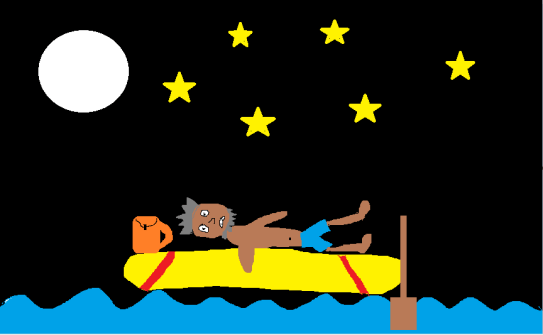
Camera pans over the vast ocean, with the moon glittering and reflecting in the sea. The gentle sound of the waves lapping plays, as the camera slowly focuses on a yellow dingy floating in the ocean. As the camera gets closer we see a single man, barely clothed and looking emaciated, sprawled out and seemingly asleep. He is surrounded by bags, life jackets and items of clothing… but no one that owns them. Emotional music begins to play as the camera slowly zooms back out, and lights appear on the horizon. A close up of the mans face then appears, a single tear rolls down his cheek.

my move poster


 2. Italian Port City

Morning

The sun is peeking over the horizon and sea birds are chirping from the rooftops. The yellow dingy is beached on the rubbish, strewn beach.

Camera follows a trail left in the sand

The main character is lying face down in the sand as people carry on with their day-to-day business around him. The hum of voices fills the air and a seabird lands beside him, seemingly checking if he is alive or dead. The main character stirs and lifts his head to take in his surroundings. People do not pay any notice to him, much to his surprise. He continues to lay down in the sand, exhausted.

Camera pans out to the sound of the sea 


3. Busy street

Afternoon

The sun is going down, casting shadows across the street

Sound of people talking and the intermittent whiz of scooter engines

The main character is trudging down a cobbled street when he accidentally knocks into a portly man who is going into the opposite direction. The main character then puts his hand up in a gesture of sorry but the other gentleman swats his hand away and sneers at him. The main character continues down the street in search of something to drink and somewhere to stay. As he rounds a bend in the street he spots a beautiful wishing fountain that looks to be spraying clean water.

Camera slowly pans to his face as a small smile appears

Sound of slashing water intensifies 

He hobbles over to the fountain and plunges his head in, taking a huge gulp of water. He sees money scattered across the bottom and reaches to take some before an elderly woman forcefully taps him on the shoulder and shakes her head at him. He tries to gesture to her that he is thirsty, but his hands are again swatted away. Feeling confused and embarrassed, he leaves and eventually sits down below a small bridge to rest . A tear wells up in his eye (Close up shot)

Sad music plays as the camera fades to black, signifying night time


4. Under a crumbling bridge, people walking past

Morning

The buzz of the Sunday market reverberates around the narrow city street

The main character stirs and rears his head from a fetal position. He notices that many of the people he sees are wearing blue football shirts, and are heading to what he presumes is the center of town. Stretching his legs out in front of him, he heaves himself up off the ground and decides to follow the crowd.

Cut to zoomed out shot showing vast crowds of people snaking their way through the streets towards the local football stadium – faint chants can be heard

Cut back to main character still walking

As the main character rounds a bend he sees a large open topped stadium that people are pouring into. He is in awe as he has only ever read about stadiums like these. He approaches one of the entrances, however a man in a reflective jacket blocks his path and points in the opposite direction. A look of sadness appears on the main characters face and he turns to walk away. However, a small child comes up behind him and tugs on his arm. Turning to see who it is, he looks down and smiles. The child, no more than 10, reaches into his pockets and produces 10 euros. He thrusts it into the mans hand with a huge grin and runs off into the stadium. Our main character is now faced with a dilemma. He looks to his left and sees a stall where they look to be selling food, and on his right is the football stadium with a sign that shows a ticket for 10 euros. Looking down at his stomach,

Stomach gurgling sound

he edges towards the food stand but then stops. He remembers


From this lesson I have learned a variety of show and don’t tell skills. I have made use of my characters 5 senses which will help the reader to understand how my character is feeling and what he is seeing. I learned a variety of skills relating to film, especially after watching some short films by other people. This taught me the importance of music and scenery in film, which I would  never have thought about before. I have tried to invoke human interest throughout my piece, with one of the main points being the meeting between a young boy and the main character. People usually react differently to children than they do to others so I decided to play on that, and I also used the child as a symbol of hope. My end product turned out to be a really effective short script. From the feedback I received, I know that others found the story interesting and could feel a connection with my main character.